Evaluating Minimalist Grid Seamless Patterns 04 for Professional Design Projects
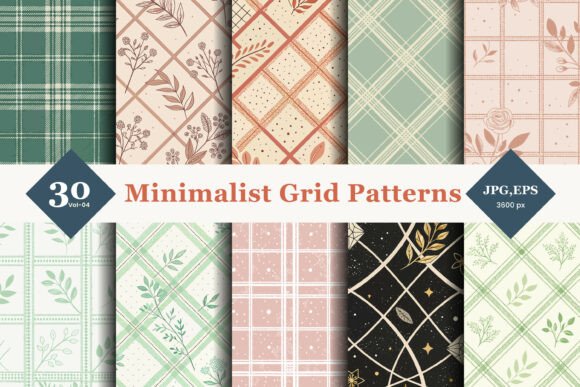
In the realm of surface design and digital asset creation, the demand for versatile, high-quality textures is constant. Among the various aesthetic trends that have gained traction in recent years, clean geometry and contemporary simplicity stand out as enduring favorites. Minimalist Grid Seamless Patterns 04 represents a specific collection within this category, designed to cater to designers who require precision, scalability, and understated elegance. This article provides a comprehensive evaluation of this pattern set, analyzing its technical specifications, use cases, and how it compares to broader categories of geometric design assets.
Understanding the Core Concept
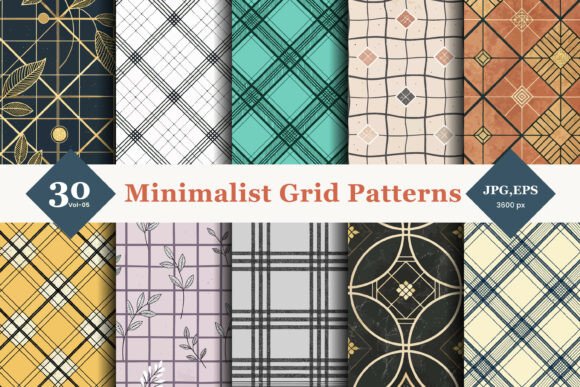
At its foundation, Minimalist Grid Seamless Patterns 04 is a curated library of thirty distinct patterns that rely on the structural integrity of grid systems. Unlike organic or chaotic abstract designs, these patterns are built upon mathematical regularity. The "seamless" aspect is critical; it means that when the pattern tile is repeated, there are no visible breaks or misalignments at the edges. This allows the texture to be applied to any surface area—whether it is a small business card or a large-scale fabric roll—without requiring complex stitching or manual adjustment by the designer.
The aesthetic is defined by what is absent as much as what is present. By stripping away excessive ornamentation, the focus shifts to line weight, spacing, and contrast. This makes the patterns highly adaptable. They do not compete with other design elements such as typography or photography but rather serve as a supportive background that adds depth and structure without overwhelming the viewer. For professionals in branding, packaging, and textile design, this balance between presence and subtlety is often the most difficult quality to achieve, making Minimalist Grid Seamless Patterns 04 a compelling resource.
Technical Specifications and File Formats
One of the primary decision factors for designers selecting digital assets is the file format and resolution. Minimalist Grid Seamless Patterns 04 addresses this by providing two distinct formats: high-resolution JPG files and editable EPS vector files. Understanding the tradeoffs between these formats is essential for choosing the right tool for the job.
- High-Resolution JPG Files (300 DPI): These files are raster-based images optimized for immediate use. With a resolution of 300 dots per inch, they meet the standard requirement for professional printing. This format is ideal for quick mockups, web design backgrounds, or projects where vector editing is unnecessary. The JPG format ensures broad compatibility across various software platforms, from Adobe Creative Cloud applications to simpler online design tools.
- EPS Vector Files: For projects requiring unlimited resizing without loss of quality, the included EPS (Encapsulated PostScript) files are indispensable. Because vectors are defined by mathematical equations rather than pixels, they can be scaled from the size of a postage stamp to a billboard without becoming pixelated or blurry. Furthermore, because these files are editable, designers can modify line thickness, color palettes, and grid density to match specific brand guidelines. This level of customization is rarely available in pre-made raster patterns.
The inclusion of both formats significantly enhances the value proposition of the collection. It caters to both the workflow efficiency required for rapid production and the creative flexibility needed for bespoke design solutions.
Comparing Minimalist Grid Patterns to Other Geometric Styles
When evaluating Minimalist Grid Seamless Patterns 04, it is helpful to compare it against other common geometric styles found in the market, such as mandalas, intricate lace-like filigree, or bold maximalist geometries.
Vs. Intricate Lace or Filigree Patterns: Traditional decorative patterns often rely on dense detail and complex interweaving. While visually rich, these patterns can become muddy when printed at smaller scales or used as backgrounds for text-heavy layouts. In contrast, minimalist grids maintain clarity at any scale. If a designer needs a background that supports legible typography, minimalist grids are superior. However, if the goal is to create a luxurious, ornate feel for a wedding invitation or a high-end jewelry box, a more intricate pattern might be the better choice.
Vs. Bold Maximalist Geometries: Bold geometries often use thick lines, high-contrast colors, and irregular shapes to create energy and movement. These are excellent for grabbing attention in advertising or youth-oriented fashion. Minimalist grids, however, offer a calmer visual experience. They are better suited for corporate branding, educational materials, or wellness products where trust, stability, and cleanliness are key messaging goals. The tradeoff here is impact versus versatility; bold patterns make a statement, while minimalist patterns provide a foundation.
Vs. Solid Colors or Subtle Textures: Some designers opt for solid colors or very faint noise textures to keep designs clean. While these options are safe, they can sometimes lack character or fail to distinguish one section of a layout from another. Minimalist grids add enough visual interest to prevent a design from feeling flat, yet they remain neutral enough to avoid distraction. This middle ground makes them a safer choice for general-purpose design templates compared to the extremes of blank space or heavy texture.
Ideal Use Cases and Applications
The versatility of Minimalist Grid Seamless Patterns 04 allows it to be applied across a wide spectrum of industries. Below are specific scenarios where this collection excels.
Fabric Printing and Apparel
In the textile industry, repeat patterns are fundamental. The seamless nature of these files ensures that when the pattern is tiled onto fabric, the transition is invisible. The minimalist aesthetic works particularly well in modern apparel, home decor, and accessories. For example, a subtle grid pattern can add texture to a plain white t-shirt or a linen curtain without clashing with the wearer’s other accessories. The ability to edit the EPS files allows manufacturers to adjust the scale of the grid to suit different garment sizes, ensuring the pattern looks proportional on both a child’s dress and an adult’s coat.
Digital Planners and Productivity Tools
The rise of digital planning has created a massive market for printable and digital planner inserts. Users often seek backgrounds that are easy on the eyes and do not interfere with handwriting or digital note-taking. Minimalist grids provide a structured framework that aids organization without being distracting. The clean lines help users align their text and drawings, enhancing the functionality of the planner. Additionally, the instant download feature allows creators to quickly update their product libraries with fresh, trendy designs.
Packaging and Brand Identity
Packaging design requires surfaces that communicate brand values instantly. A minimalist grid can convey precision, modernity, and eco-consciousness—traits associated with many contemporary consumer goods, from tech gadgets to organic skincare. When used on boxes, bags, or labels, these patterns elevate the perceived value of the product. The crisp detail of the 300 DPI JPGs ensures that fine lines remain sharp even on small packaging components, maintaining brand integrity.
Invitations and Stationery
For formal events, such as weddings or corporate galas, understated elegance is preferred over flashy decorations. Minimalist grids offer a sophisticated backdrop for elegant typography and gold foil accents. The geometric structure provides a sense of order and formality, which aligns well with the tone of such occasions. Designers can leverage the editable vector files to incorporate brand colors or custom monograms directly into the grid structure, creating a cohesive look.
Limitations and Considerations
While Minimalist Grid Seamless Patterns 04 is a robust resource, it is not a universal solution. Its strength in simplicity is also its primary limitation. If a project requires a whimsical, playful, or highly emotional tone, the rigid structure of a grid may feel too cold or clinical. In such cases, organic shapes, watercolor textures, or hand-drawn illustrations would be more appropriate.
Furthermore, because minimalist designs are popular, there is a risk of visual fatigue if the same grid structures are overused. Designers must ensure they are applying these patterns creatively—perhaps by combining multiple grids, altering opacities, or integrating them with photographic elements—to keep the final output fresh and unique. The availability of thirty unique patterns helps mitigate this risk, offering variety within the theme, but conscious application is still necessary.
Decision Factors: Is This Collection Right for You?
Selecting the right design asset depends on your specific workflow and project requirements. Consider the following questions to determine if Minimalist Grid Seamless Patterns 04 is the optimal choice.
- Do you need scalability? If you frequently resize graphics for different media, the EPS vector files are a significant advantage over raster-only competitors.
- Is your target audience modern and professional? Minimalist aesthetics resonate strongly with audiences who appreciate clean, uncluttered design. If your brand identity leans towards traditional or ornate, this collection may not align.
- Do you require immediate usability? The inclusion of high-resolution JPGs allows for instant integration into projects without the need for vector tracing or conversion, saving time in fast-paced environments.
- Are you working on repetitive tasks? For designers producing bulk items like packaging runs or planner series, having a cohesive set of thirty patterns reduces decision fatigue and ensures consistency across a product line.
In conclusion, Minimalist Grid Seamless Patterns 04 offers a practical, high-quality solution for designers seeking to incorporate clean geometry into their work. By balancing ease of use with professional-grade customization options, it serves as a valuable addition to any digital asset library. Whether used for fabric printing, digital planning, or branding, these patterns provide a reliable foundation for creating stylish, understated designs that stand the test of time.