Evaluating Soft Watercolor Nursery Digital Patterns for Personalized Craft Projects
The demand for personalized, high-quality craft materials has surged in recent years, driven by the desire to create unique gifts, custom stationery, and distinctive home decor. Among the various digital assets available to creators, Soft Watercolor Nursery Digital Patterns have emerged as a versatile and aesthetically pleasing option. These digital papers offer a gentle, artistic touch that appeals to parents, designers, and hobbyists alike. However, selecting the right digital asset requires understanding not just the visual appeal, but also the technical specifications, file formats, and practical applications involved.
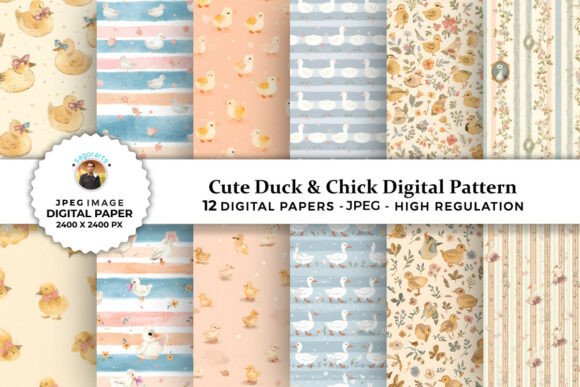
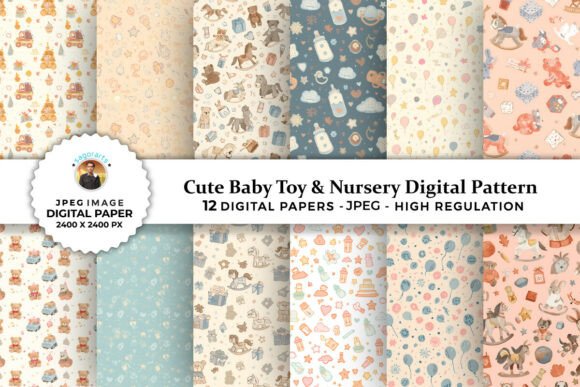
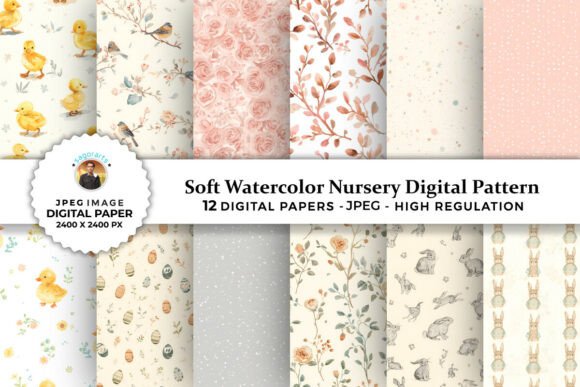
This analysis explores what makes soft watercolor nursery patterns distinct from other digital design resources, how they compare to similar styles, and whether they are the optimal choice for your specific project needs. By examining the features of a typical set—such as 12 high-resolution JPEG files within a single zip archive—we can better evaluate their value proposition for gift wrapping, greeting cards, invitations, tumbler wraps, backgrounds, and scrapbooking.
Understanding the Aesthetic: What Defines Soft Watercolor Nursery Patterns?
At its core, a soft watercolor nursery digital pattern is a digital image designed to mimic the fluid, translucent qualities of traditional watercolor paint. Unlike sharp vector graphics or rigid geometric prints, these patterns rely on blended hues, organic shapes, and subtle gradients. The "nursery" designation implies a specific color palette and thematic content: pastel tones like blush pink, mint green, soft yellow, and sky blue, often accompanied by motifs such as clouds, stars, animals, or botanical elements.
The distinctiveness of this style lies in its emotional resonance. Watercolors evoke feelings of calmness, warmth, and nostalgia, making them particularly suitable for baby-related products and children’s spaces. When evaluating Soft Watercolor Nursery Digital Patterns, it is important to look for quality in the blending of colors. Low-quality digital versions may appear pixelated or muddy, whereas high-resolution versions maintain the delicate texture of paper and pigment.
Technical Specifications and File Integrity
For digital crafters, the technical details of the asset are just as critical as the visual design. A standard, well-produced set typically includes:
- Quantity: A variety of designs, commonly 12 unique patterns, ensures enough diversity for large projects like full scrapbook layouts or multiple gift packages.
- Format: JPEG (or JPG) is the most common format for these assets due to its universal compatibility with printing software, graphic design programs, and online platforms.
- Resolution: High resolution is non-negotiable for professional results. Files sized at 2400 x 2400 pixels provide a sufficient pixel density for most print-on-demand services and home printers without resulting in excessive file sizes that slow down workflows.
- Organization: Delivery via a single zip file simplifies the user experience, ensuring all related patterns are stored together and easily accessible.
When comparing options, always verify these specifications. Some lower-cost alternatives may offer lower resolutions (e.g., 72 DPI web-only images) which will appear blurry when printed. Conversely, some premium sets might offer TIFF or PNG formats with transparency, though JPEG remains the industry standard for solid background patterns.
Comparing Soft Watercolor Patterns to Alternative Styles
While soft watercolor nursery patterns are popular, they are not the only option for digital crafting. Understanding how they stack up against other styles helps consumers make informed decisions based on their specific goals.
Watercolor vs. Vector Graphics
Vector graphics (SVG, EPS) are created using mathematical equations rather than pixels. They are infinitely scalable without loss of quality and are ideal for cutting machines like Cricut or Silhouette. However, vectors often lack the organic, hand-painted texture of watercolor. If your goal is to create crisp logos or precise cut-outs, vectors are superior. But for creating textured backgrounds for photo books or elegant invitation suites, Soft Watercolor Nursery Digital Patterns offer a depth and realism that vectors cannot replicate.
Watercolor vs. Geometric or Abstract Prints
Geometric patterns offer a modern, clean aesthetic that pairs well with minimalist design trends. They are timeless and less gender-specific than many nursery themes. In contrast, soft watercolor patterns are inherently softer and more whimsical. For a contemporary nursery with bold accents, geometric prints might be preferred. For a traditional, cozy, or romantic nursery theme, watercolor patterns are the more appropriate choice.
Digital Downloads vs. Physical Paper
Some crafters prefer buying physical patterned paper. While physical paper offers immediate tactile feedback, digital downloads provide significant advantages in cost, storage, and flexibility. With Soft Watercolor Nursery Digital Patterns, you can print only what you need, reducing waste. You can also resize patterns to fit unconventional surfaces, such as tumblers or laptop skins, which is difficult with pre-cut physical paper. Additionally, digital files can be reused indefinitely across different projects.
Practical Applications and Use Cases
The versatility of a 12-pattern digital pack allows for extensive creative use. Here are several scenarios where these patterns excel:
- Gift Wrapping: Print the patterns on lightweight cardstock or specialty paper to create custom wrapping paper. This adds a personal touch to baby showers, birthdays, and holiday gifts. The 2400x2400 pixel resolution ensures that small details remain clear even when scaled down for smaller gifts.
- Greeting Cards and Invitations: Use one pattern as a background and overlay text or clipart for baby announcements, shower invitations, or thank-you notes. The soft colors do not compete with text, ensuring readability while maintaining an elegant look.
- Tumbler Wraps: Vinyl decals for tumblers often require seamless patterns. Many digital watercolor packs are designed to tile seamlessly, allowing users to wrap the design around curved surfaces without visible breaks. Always check if the pattern is explicitly noted as "seamless" before purchasing for this purpose.
- Scrapbooking: Digital scrapbookers can layer these patterns over photos to create themed pages. The ability to adjust opacity and blend modes in software like Photoshop or Canva allows for sophisticated effects that mimic physical layering.
- Home Decor Backgrounds: Beyond crafts, these patterns can serve as digital wallpapers for tablets or phones, or as backgrounds for social media posts related to parenting and lifestyle content.
Evaluating Tradeoffs and Limitations
No product is perfect, and understanding the limitations of Soft Watercolor Nursery Digital Patterns is crucial for realistic expectations.
Color Accuracy
One of the biggest challenges with digital printing is color management. The colors seen on a monitor (RGB color space) may differ from those produced by a printer (CMYK color space). Pastel colors, in particular, can appear duller or shift in hue depending on the ink and paper used. To mitigate this, test prints are recommended, especially for large orders. Some sellers provide CMYK versions, but RGB is standard for general consumer downloads.
Seamlessness Requirements
Not all digital patterns are seamless. If you intend to use a pattern for wrapping a large box or covering a tumbler, you need a tileable image. If the pattern is not seamless, you will see visible grid lines or cuts in the design. Buyers should carefully review product descriptions to confirm whether the patterns are intended for general use or specifically for seamless tiling.
Copyright and Usage Rights
It is essential to understand the licensing terms. Most digital patterns come with a personal use license, meaning you can sell physical items made from them (like wrapped gifts or printed cards) but cannot resell the digital file itself. Commercial licenses, which allow for broader distribution, may cost more. Always read the fine print to avoid legal issues.
Decision Factors: Is This the Right Choice for You?
Choosing between different digital assets depends on your specific project requirements. Consider the following decision matrix:
- Choose Soft Watercolor Nursery Digital Patterns if: You want a warm, artistic, and traditional aesthetic. You need flexible, reusable assets for multiple projects. You are comfortable with basic printing or digital design tools. You prioritize cost-effectiveness and environmental sustainability by printing only what you need.
- Consider Alternatives if: You need crisp, scalable lines for cutting machines (choose SVG/Vectors). You require a modern, minimalist look (choose Geometric/Abstract). You need exact color matching for brand identity (choose professionally printed stock or high-end commercial digital packs with proofing). You are unfamiliar with digital file handling and prefer a hands-off approach (consider hiring a designer or buying physical goods).
In conclusion, Soft Watercolor Nursery Digital Patterns represent a strong value proposition for crafters seeking elegance and versatility. The combination of high-resolution JPEG files, diverse design options, and broad applicability makes them a staple resource for many DIY enthusiasts. By understanding their strengths, technical requirements, and potential limitations, users can effectively integrate these patterns into their creative workflows, achieving professional-looking results with minimal effort.